
Marcy Kaptur Biography and Political Legacy
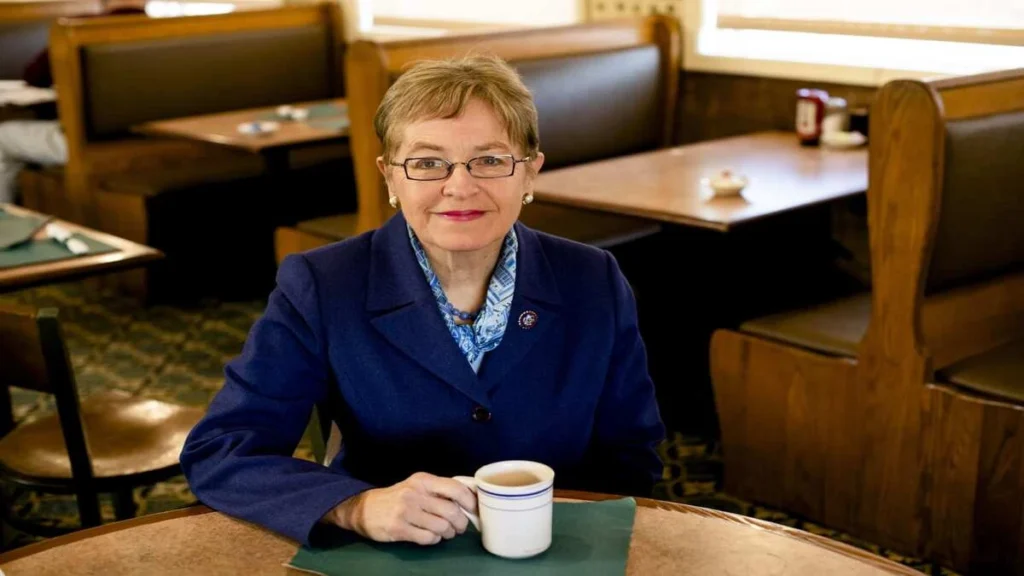
Marcy Kaptur is a veteran American politician serving in the U.S. House of Representatives from Ohio’s 9th congressional district. She ranks among the longest-serving women in U.S. congressional history and continues to influence national policy debates.
Marcy Kaptur has a strong background rooted in public service and community development. She was born on June 17, 1946, in Toledo, Ohio, and grew up in a working-class Polish-American family. She studied history at the University of Wisconsin and later earned a master’s degree in urban planning from the University of Michigan.
Before entering Congress, Kaptur worked as a city planner and policy advisor. She also served in the Carter administration, where she gained experience in national economic and urban development policies. Therefore, she built a strong foundation in governance early in her career.
She entered Congress in 1983 and has continuously served Ohio’s 9th district since then. Her long tenure highlights her strong voter support and political resilience. Additionally, she has served on key committees, including the House Appropriations Committee, where she influences federal spending decisions.
Over the years, she has focused on infrastructure, manufacturing, labor rights, and veterans’ affairs. Moreover, she played a role in supporting national memorial projects and regional economic development initiatives.
Kaptur remains a strong advocate for working-class communities. She often speaks on trade policies, job protection, and industrial growth. Consequently, she maintains a loyal base in her district despite shifting political dynamics.
As of recent years, she continues to serve actively in Congress and remains a significant voice in Democratic politics. Her political legacy reflects decades of continuous public service and legislative influence.
Marcy Kaptur Age: How Old Is the Ohio Congresswoman?
Marcy Kaptur age highlights her long political journey in U.S. Congress. She was born on June 17, 1946, in Toledo, Ohio. Therefore, she has served for decades in American politics. Additionally, she entered Congress in 1983 and continues to represent Ohio’s 9th district. Her long tenure makes her one of the most experienced lawmakers in the House. Moreover, Kaptur’s age reflects her extensive public service career. She remains active in legislative work despite being in her late seventies.
Marcy Kaptur’s Height
How tall is Marcy Kaptur?
Marcy Kaptur height is not officially known so no exact measurement is available. However, public information about her focuses mainly on her long political career rather than physical attributes. Additionally, she remains a long-serving U.S. Representative from Ohio’s 9th district. She continues to influence key U.S. policy debates.
Marcy Kaptur Husband | Spouse
Is Marcy Kaptur married?
Marcy Kaptur’s personal life remains private and she is not married and does not have a publicly known husband. Instead, she has focused her life on public service and her long political career in Congress. Therefore, Marcy Kaptur husband-related information is minimal and unconfirmed . Moreover, she continues to prioritize her role as a U.S. Representative for Ohio’s 9th district, where she has served since 1983. She continues to prioritize her legislative work and community representation over sharing private relationships.
Marcy Kaptur Education & Academic Background
Marcy Kaptur education reflects a strong academic background in history and urban planning. Kaptur earned a Bachelor of Arts in history from the University of Wisconsin–Madison in 1968, where she built her foundation in political and social studies. Additionally, she pursued advanced studies and completed a Master of Urban Planning at the University of Michigan in 1974, strengthening her expertise in city development and policy planning. Moreover, she also attended postgraduate studies at the Massachusetts Institute of Technology, focusing on urban planning and development finance. Therefore, her education directly supported her early career in urban planning and public service. Furthermore, Marcy Kaptur education helped shape her long political career in Congress. Consequently, she has applied her academic training to infrastructure, housing, and economic development policies.
Marcy Kaptur Parents & Family Background
Marcy’s parents played an important role in shaping her strong work ethic and values. She was born to Stephen and Anastasia Kaptur in Toledo, Ohio, and she grew up in a Polish-American working-class family. Additionally, her parents supported her education and encouraged civic responsibility. Therefore, Marcy parents influenced her early interest in public service and community development. Moreover, she often reflects on her family’s humble background when discussing economic and labor issues. Her upbringing shaped her lifelong focus on working-class and middle-class Americans in Congress.
Marcy Kaptur’s Religion
What religion is Marcy Kaptur?
Marcy Kaptur religion is generally identified as Roman Catholic, reflecting her Polish-American family background. Additionally, she often connects her values with Catholic social teachings in public discussions. Therefore, her beliefs emphasize dignity, community service, and social justice principles. Moreover, her religion influences her views on poverty reduction and economic fairness policies. She supports programs that help working-class families and vulnerable communities. Furthermore, she rarely discusses personal faith in detail during political campaigns.
Marcy Kaptur Party Affiliation : Political Party and Career
Marcy Kaptur party affiliation is with the Democratic Party in the United States. Additionally, Marcy Kaptur has consistently represented Democratic values since entering Congress in 1983. Therefore, she aligns with policies supporting labor rights, social programs, and economic fairness. Moreover, her Democratic Party membership influences her legislative priorities in Ohio’s 9th district. She often supports infrastructure investment and working-class protections. Furthermore, her party alignment shapes her voting record in Congress. She remains a key Democratic voice in the House of Representatives.
Marcy Kaptur Election Race : Ohio 9th District Battle, Candidates, and Campaign
Marcy Kaptur election race in Ohio’s 9th Congressional District has become highly competitive heading into 2026. She is a long-serving Democratic incumbent, faces a tougher reelection environment due to redistricting and shifting voter demographics. Additionally, the district now leans more Republican compared to previous cycles, which increases electoral pressure on her campaign. Moreover, several Republican candidates are competing in the primary to challenge her in the general election. Therefore, the race has gained national attention as one of the key battleground House contests. Furthermore, Kaptur continues to highlight her long record on jobs, manufacturing, and veterans’ issues. She relies on strong name recognition and deep local support in Toledo and surrounding areas.
Marcy Kaptur’s Policies
Marcy Kaptur policies focus on economic growth, labor rights, and infrastructure development. Kaptur strongly supports manufacturing jobs and working-class protections in Ohio’s 9th district. Additionally, she advocates for fair trade policies that protect American industries from outsourcing. Moreover, she prioritizes veterans’ benefits and healthcare access across her legislative agenda. Therefore, her policies often emphasize social support systems and community development. Furthermore, her policies include investments in clean energy and transportation infrastructure. She also supports strengthening Social Security and Medicare programs.
Marcy Kaptur Net worth
Marcy Kaptur net worth is estimated to be around $1 million to $2 million. Additionally, her wealth mainly comes from her salary as a U.S. Representative and retirement savings accumulated over decades of service. Therefore, Marcy net worth reflects steady government income rather than private business investments or outside commercial ventures. Moreover, she has served in Congress since 1983, which provides consistent financial stability and benefits. Furthermore, her financial profile remains relatively modest compared to many politicians with private-sector backgrounds.